
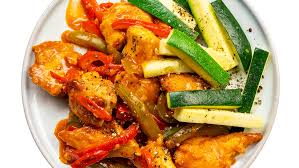
The definitive Angry Chicken Recipe is the ultimate solution for home cooks looking to transform ordinary weeknight dinners into a spicy chicken dinner masterpiece.
Known globally for its bold, unapologetic heat and deeply savory profile, this dish—often inspired by Asian-style stir-fries or Korean Buldak (fire chicken)—combines tender meat with a fiery chili glaze.
Whether you want to challenge your spice tolerance or impress guests at your next gathering, this step-by-step cooking guide delivers restaurant-quality poultry right from your kitchen counter.
What is Angry Chicken?
Angry Chicken earns its name from its vibrant red hue and the aggressive kick of heat delivered by a meticulous blend of fresh chilies, hot pepper pastes, and aromatic spices. The secret to its undeniable appeal lies in the balance of elements: fiery spice is paired with subtle sweetness, an acidic pop, and deep, unctuous umami flavors.
Unlike standard hot wings that rely solely on acidic buffalo sauce, this recipe focuses on building layers of flavor. The chicken pieces are lightly dredged to create a textured, crispy exterior that holds onto a sticky glaze. Every single bite delivers a satisfying crunch followed immediately by a rush of complex heat that warms the palate without completely masking the natural savoriness of the meat.
Essential Kitchen Equipment Needed
Having the right tools ready ensures your cooking flow stays uninterrupted. Before you begin turning up the heat, gather these essential kitchen tools:
- Large Cast-Iron Skillet or Heavy-Bottomed Wok: Essential for achieving high-heat searing and maximum heat retention.
- Sharp Chef’s Knife: For uniform, bite-sized butchering of your chicken pieces.
- Large Mixing Bowls: One for the liquid marinade and one for the dry dredging station.
- Whisk or Silicone Spatula: To thoroughly emulsify the sticky glaze and toss the ingredients evenly.
- Measuring Spoons and Cups: Crucial for managing the exact ratio of fiery chili to sweet honey.
- Meat Thermometer: To ensure your poultry reaches a perfectly safe internal temperature.
- Splatter Guard: Highly recommended when working with shallow-frying oil and bubbling sauces.
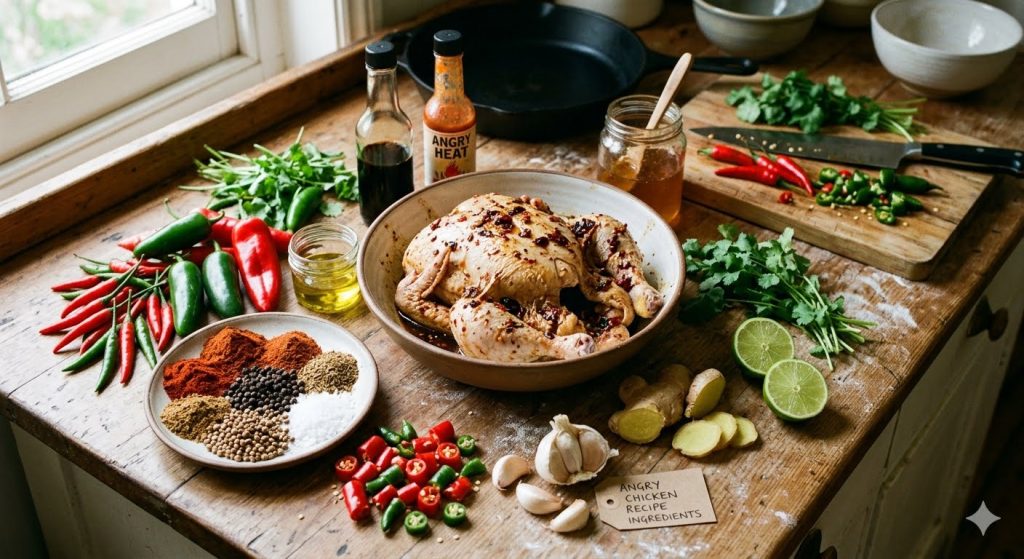
Complete Ingredient Checklist
For the best results, use high-quality, fresh components. This recipe yields 4 generous servings.
For the Chicken & Marinade
- Chicken Thighs (Boneless, Skinless): 1.5 lbs (700g), cut into 1-inch, uniform cubes. Thigh meat stays incredibly juicy under intense heat.
- Soy Sauce (Low Sodium): 2 tablespoons, to establish a savory, salty foundation.
- Shaoxing Rice Wine (or Dry Sherry): 1 tablespoon, to tenderize the meat fibers and mask gamey notes.
- Fresh Ginger: 1 tablespoon, grated finely.
- Fresh Garlic: 3 cloves, minced.
- Black Pepper: ½ teaspoon, freshly ground.
For the Crispy Coating
- Cornstarch or Potato Starch: ½ cup. Starch yields a lighter, crispier texture than standard wheat flour.
- Baking Powder: ½ teaspoon. This alters the pH surface level to guarantee a superior crunch.
For the Signature “Angry” Fire Glaze
- Gochujang (Korean Chili Paste) or Sriracha: 3 tablespoons. This dictates the vibrant red base color.
- Gochugaru (Chili Flakes) or Red Cayenne Powder: 1 to 2 tablespoons, depending on your personal heat preference.
- Honey or Brown Sugar: 2 tablespoons, to mellow out the sharp bite of the raw chilies.
- Rice Vinegar: 1 tablespoon, providing an essential acidic lift.
- Toasted Sesame Oil: 1 tablespoon, finishing the sauce with a nutty, aromatic undertone.
- Chicken Broth or Water: ¼ cup, used to loosen and emulsify the glaze.
For the Stir-Fry & Garnish
- Vegetable Oil: 3 tablespoons, choosing a high-smoke-point oil for frying.
- Red and Green Bell Peppers: 1 cup, sliced thinly to add a sweet crunch and visual contrast.
- Green Onions (Scallions): 3 stalks, chopped diagonally (separate the white bases from the green tops).
- Toasted Sesame Seeds: 1 tablespoon, for a professional aesthetic garnish.
Prep Work: How to Prepare Your Ingredients
- Prep the Protein: Pat the chicken thighs completely dry using paper towels. Moisture is the enemy of a good sear. Cut them into equal 1-inch cubes so they cook at an identical rate.
- Infuse Flavor: In a large bowl, whisk together the soy sauce, rice wine, minced garlic, grated ginger, and black pepper. Toss the chicken pieces in this liquid marinade, cover, and let rest on the counter for 15 to 20 minutes.
- Mix the Fire Sauce: While the meat marinades, grab a small bowl to construct your glaze. Whisk together the Gochujang, chili flakes, honey, rice vinegar, sesame oil, and chicken broth until a smooth, uniform red sauce forms. Taste it carefully; it should taste boldly spicy with a sweet finish.
- Chop the Aromatics: Slice your bell peppers and separate your green onions. Keep the white parts of the scallions with the peppers for cooking, and reserve the green tops exclusively for the final cold garnish.
How to Make Angry Chicken: A Step-by-Step Cooking Guide
Step 1: The Dredging Process
Remove the marinating meat from the bowl, allowing any excess liquid marinade to drip away. In a clean, dry bowl, combine the cornstarch and baking powder. Drop the marinated chicken pieces into the starch mixture a few at a time.
Toss thoroughly until every single crevice is completely coated in a thin, powdery white layer. Shake off any excess starch before frying.
Step 2: Searing to Crispy Perfection
Place your heavy-bottomed skillet or wok over medium-high heat and add the vegetable oil. Wait until the oil shimmers slightly. Carefully lay the coated chicken into the hot pan in a single, uncrowded layer.
Cook undisturbed for 4 to 5 minutes until the bottom forms a golden-brown crust. Flip the pieces over and cook for another 3 to 4 minutes until the chicken is cooked through and registers an internal temperature of 165°F (74°C). Remove the crispy pieces from the pan and set them aside on a wire rack or paper towel-lined plate.
Step 3: Blistering the Vegetables
Leave about one tablespoon of cooking oil in the same hot skillet, keeping all those flavorful browned bits at the bottom. Drop in the sliced bell peppers and the white bases of the chopped green onions. Stir-fry rapidly over high heat for 2 minutes. You want the vegetables to take on charred, blistered edges while still retaining their crisp structural snap.
Step 4: Simmering and Reducing the Glaze
Turn the stovetop heat down to medium. Pour the pre-mixed fire sauce directly into the center of the skillet with the blistered vegetables. Bring the liquid mixture to a gentle, bubbling simmer.
Let it cook down for about 1 to 2 minutes. The sugars in the honey will begin to caramelize, causing the sauce to transform into a glossy, thick, sticky glaze that easily coats the back of a spoon.
Step 5: The Final Toss
Dump the cooked, crispy chicken pieces back into the bubbling skillet. Using a silicone spatula, toss the ingredients with a folding motion until every single piece of chicken is completely lacquered in the vibrant red glaze.
Cook for one final minute to let the crispy coating absorb the sauce without losing its structure. Remove from the heat source immediately.
Step 6: Garnish and Serve Hot
Transfer your steaming Angry Chicken onto a wide serving platter. Scatter the reserved bright green scallion tops and toasted sesame seeds generously over the top. Serve immediately while roaring hot.
Pro Tips for Recipe Success
- Adjusting the Heat Index: If you want a milder version, cut the chili flakes in half and add an extra tablespoon of honey. To turn the heat all the way up, slice fresh bird’s eye chilies or habaneros directly into the vegetable stir-fry step.
- Maintaining Crunch: Do not let the chicken sit in the simmering sauce for too long. A quick 60-second toss ensures the starched crust stays wonderfully crunchy beneath the wet glaze.
- The Best Side Pairings: Balance out the aggressive heat of this dish by serving it alongside a bowl of steaming jasmine rice, cooling pickled radishes, or a simple cucumber salad.
(FAQs)
Can I use chicken breasts instead of chicken thighs?
Yes, you can easily swap in chicken breasts. However, keep a close eye on your cooking times. Chicken breasts dry out much quicker than thighs under high heat, so reduce the searing time by roughly 1 minute per side to keep the white meat tender.
How do I store and reheat any leftovers?
Store any leftovers in an airtight glass container in the refrigerator for up to 3 days. To preserve the texture when reheating, avoid the microwave, which makes the coating soggy. Instead, reheat the chicken in a hot skillet with a splash of water, or pop it into an air fryer at 350°F (175°C) for 5 minutes.
Is there a gluten-free modification for this recipe?
Absolutely. To make this dish gluten-free, substitute the traditional soy sauce with tamari or liquid coconut aminos. Additionally, verify that your brand of Gochujang paste is certified gluten-free, as some commercial varieties use barley malt or wheat flour as a thickener.
Can I make this dish ahead of time?
You can easily slice the meat, chop the vegetables, and mix the fire sauce 24 hours in advance. Keep them stored in separate containers in the fridge. When you are ready to eat, simply dredge, fry, and assemble the dish fresh in under 15 minutes.
Conclusion
The Angry Chicken Recipe proves that you do not need to order takeout to experience a complex, restaurant-quality flavor profile.
By combining a velvety marinade, a crisp starch coating, and a calculated balance of fiery chilies, this dish delivers an incredible sensory experience.
It is customizable, fast enough for busy weeknights, and guaranteed to satisfy any craving for spicy food. Fire up your skillet tonight and enjoy this bold culinary creation!
Focus Keywords: Angry Chicken Recipe, spicy chicken dinner, cooking guide, kitchen tools, ingredient checklist, step-by-step cooking, chili glaze, restaurant-quality poultry, spicy food lover.